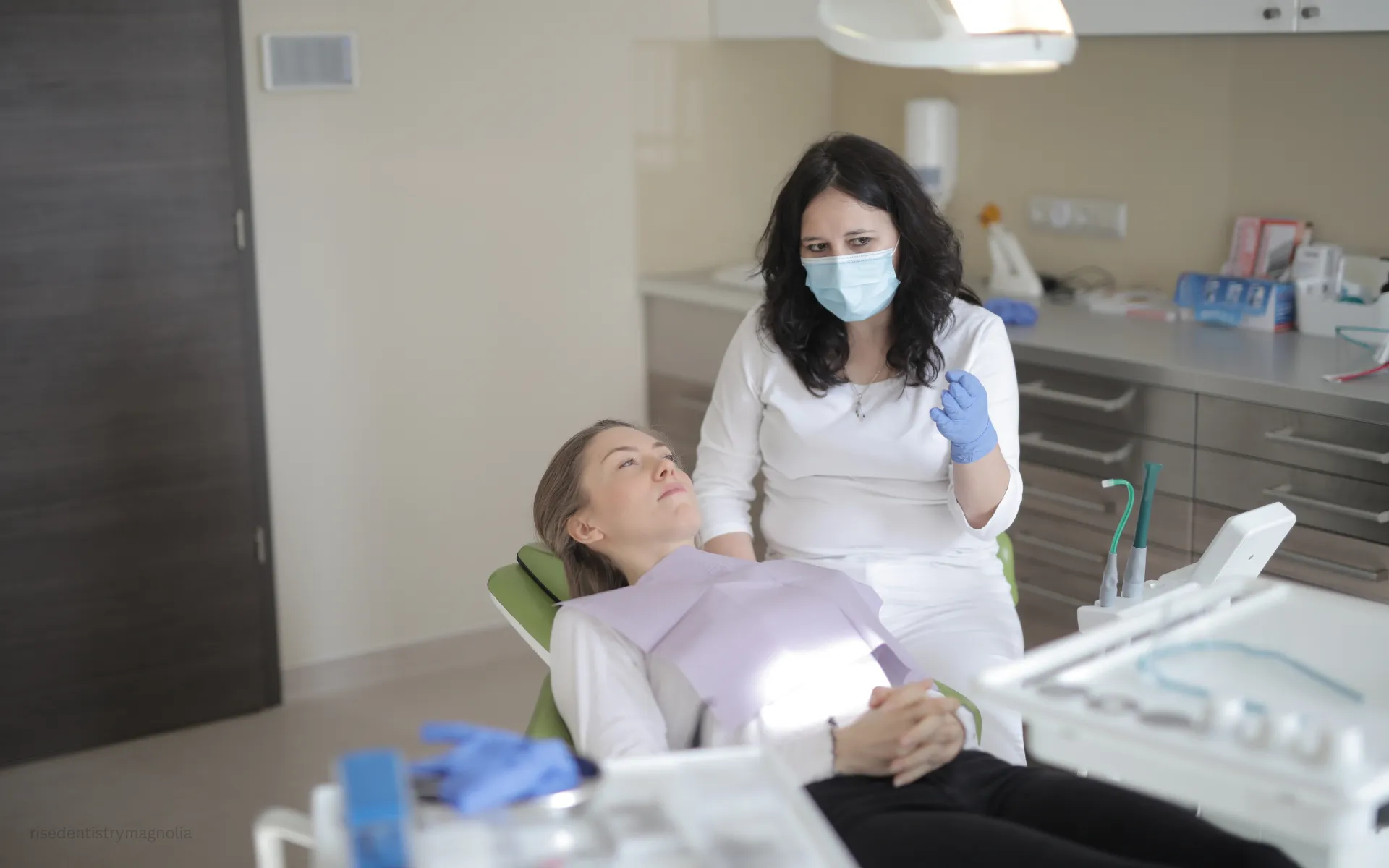

Not sure if removal is necessary? Get expert guidance and book your dental evaluation today to protect your long-term oral health!
Many people wonder, do wisdom teeth have to be removed? It’s a common concern, especially for those feeling pain or pressure in the back of the mouth. Wisdom teeth usually appear in the late teens or early twenties, and not everyone experiences issues when they come in.
However, these third molars can sometimes cause complications. If they become impacted or don’t fully erupt, they may lead to pain, swelling, infection, or even damage to nearby teeth. Determining whether removal is necessary plays an important role in protecting your long-term oral health.
At Rise Dentistry, our experienced dentist in Magnolia provides thorough evaluations to determine if wisdom tooth removal is the right choice for you. Our priority is keeping your smile healthy, comfortable, and free from preventable dental problems.
Wisdom tooth are the third set of molars located at the rear of your mouth. They usually emerge between ages 17 and 25.
Wisdom tooth were once useful for our ancestors to grind and chew hard foods. Today, they are often unnecessary due to changes in diet and jaw size.
Wisdom tooth typically develop in your late teens or early twenties, though in some cases, they may not appear at all.
Regular dental checkups can help determine whether removal is necessary.
Here are some signs wisdom teeth need to come out:
If you notice these symptoms, visit your dentist to see if removal is necessary for your oral health.
Removing wisdom tooth, even if they aren’t causing problems now, offers several important benefits:
While must wisdom teeth be removed depending on individual cases, early removal can help protect your oral health and prevent future dental issues.
The average age for wisdom teeth removal is between 15 and 22. During this period, the teeth are not fully developed, making the extraction process easier and recovery faster.
If your wisdom tooth are causing pain, infection, or misalignment, it’s time to consult an oral surgeon. A dentist will evaluate your jaw space to determine if removal is necessary.
Early removal can prevent more serious oral health issues later on.
It’s safe to keep your back molars if they are healthy and properly aligned. Not everyone needs to remove them. Here’s when it’s okay to keep them:
As long as they’re healthy and properly aligned, keeping wisdom teeth is perfectly fine with proper monitoring.
Keeping back molars that aren’t properly aligned can lead to several issues:
If your back molars aren’t properly aligned, getting one wisdom tooth removed can help prevent these problems and avoid long-term side effects of wisdom tooth extraction.
There are many myths about wisdom tooth removal. Let’s clear up a few common ones:
Not true. If your wisdom tooth are healthy and properly aligned, they may not need removal.
Removing all four wisdom tooth isn’t necessary for everyone. They only need to be removed if they are causing issues.
Experts now say not to remove your wisdom tooth unless they’re causing problems. The decision should be based on individual needs.
Always consult your dentist to determine if removal is needed for your oral health. Regular checkups help you make the right choice.
When deciding whether to remove your wisdom tooth, oral surgeons take a personalized approach. Here’s how they evaluate the need for removal:
This structured process ensures that wisdom teeth removal is needed only when necessary, helping you make an informed decision.
Here are some common questions people have about wisdom tooth removal:
Yes, if they are healthy, properly aligned, and not causing any issues, you can keep them.
It’s best to remove them between ages 15-22. Removal becomes more complicated with age, especially after 30.
If your wisdom teeth are healthy and not causing problems, experts recommend keeping them instead of removing them unnecessarily.
No, only if they are causing pain, infection, or crowding. Healthy, aligned teeth don’t need removal.
If left untreated, Back molars can lead to infection, decay, or damage to nearby teeth.

Deciding whether to remove your back molars depends on their health, alignment, and potential risks. If they’re healthy and properly aligned, removal may not be necessary. However, if they’re causing pain, infection, or misalignment, it’s important to consider removal.
Consulting with a professional, like a dentist or oral surgeon, is crucial to make the right decision for your oral health. They will assess your situation and provide personalized recommendations.
At Family Dentistry, we are here to guide you through the decision-making process. Regular checkups will help ensure your wisdom teeth are monitored and any potential issues are caught early.

EXCELLENTTrustindex verifies that the original source of the review is Google. "For years, I avoided the dentist due to my anxiety. Dr. Hassan sorathia and their team completely changed my perspective. The office has such a calming atmosphere, and the staff is compassionate and understanding. They explained every step of my treatment and made sure I was comfortable. I'm so grateful I found them and can now take care of my teeth without fear."Posted onTrustindex verifies that the original source of the review is Google. Rise was amazing! They extracted a wisdom tooth from me and the experience was completely pain free. Thank you so much!Posted onTrustindex verifies that the original source of the review is Google. I’m so grateful I found Dr. Sorathia and his wonderful staff at Rise Dentistry! From the moment I called, his office was incredibly accommodating and got me in immediately. He was professional, kind, and patient, and he truly understood my dental anxiety. I never felt rushed or pressured and he welcomed all my questions and explained each step of the process so I always knew what was happening. He made sure I understood all of my options, allowing me to make the most informed decision for my care. I left feeling comfortable, informed, and confident about my treatment. I will absolutely be returning to Dr. Sorathia and highly recommend him to anyone looking for a compassionate and thorough dentist.Posted onTrustindex verifies that the original source of the review is Google. I’m so glad I found this office! Staff is so kind and professional. They keep your comfort at the top of their priority list. Wish I had found them sooner! Can’t recommend this dentist enough!Posted onTrustindex verifies that the original source of the review is Google. Excellent Staff and Dr Sorathia very knowledgeable pleasant ambiance !Posted onTrustindex verifies that the original source of the review is Google. Had a great experience, no wait time, in and out. Everyone was friendly, informative and professional.Posted onTrustindex verifies that the original source of the review is Google. So refreshing to meet an HONEST dentist who isn’t trying to upsell you anything. Just tells you the facts doesn’t try to sway your opinion, just lays out the options based on facts and allows you to choose for yourself what works best for you. I definitely highly recommend!Posted onTrustindex verifies that the original source of the review is Google. Fantastic service! Had a bad tooth that was absolutely killing me for several days. I load going to the dentist so I don’t have a normal one. Set the appointment in the morning and got in that same day. The dentist explained saving versus extracting the tooth and 35 minutes later I was going home. He was extremely thorough and telling me what he was going to do and with the post office instructions. The staff both out front and his assistants were fantastic!! absolutely could not have asked for a better experience and he will be my dentist going forward.

 .
.